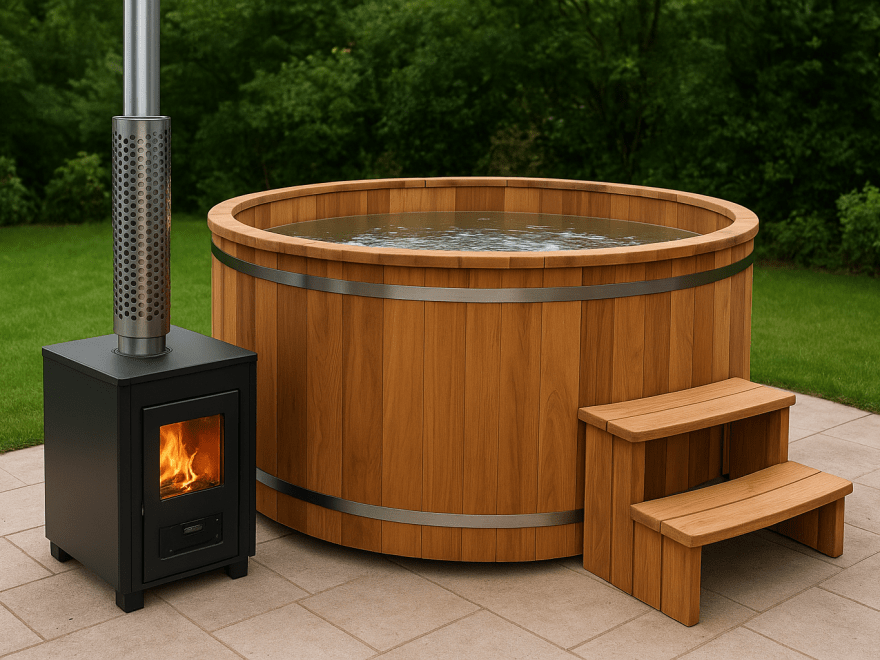
When choosing a hot tub, one of the most important decisions is how it will be heated—by electricity or wood. Each option has its own benefits, and the best choice depends on your lifestyle, budget, and where you live.
How They Work
Electric hot tubs use heating elements, like those in a kettle, to warm the water. They have digital controls, so you can set the exact temperature you want. Some even let you adjust the heat from your phone. They heat up quickly and stay at a steady temperature, but they need a strong electrical connection (usually 220V) to work properly.
Wood-fired hot tubs use a small stove to heat the water. You build a fire inside or next to the tub, and the heat warms the water naturally. It takes longer to heat up (about 1-3 hours), but many people enjoy the process—it feels more relaxing and natural. Since they don’t need electricity, they’re great for remote cabins or off-grid living.
Cost Comparison
Upfront Costs:
- Electric hot tubs can be expensive to install if you need new wiring. The tubs themselves range from affordable inflatable models ($500+) to high-end spas ($15,000+).
- Wood-fired hot tubs don’t need electrical hookups, so installation is simpler. Prices start around $3,000 for basic models and go up to $12,000 for premium designs.
Ongoing Costs:
- Electric hot tubs add to your power bill—anywhere from $50 to $150 per month, depending on how much you use them.
- Wood-fired tubs don’t use electricity, but you’ll need firewood. If you buy wood, it costs about $150-$300 per year. If you can gather your own, it’s even cheaper.
Which Fits Your Lifestyle?
Choose electric if:
✔ You want quick, easy heating with the push of a button
✔ You live in a city or suburb with reliable electricity
✔ You prefer low-maintenance, set-it-and-forget-it convenience
Choose wood-fired if:
✔ You love the natural, hands-on experience of building a fire
✔ You live off-grid or in a remote area without reliable power
✔ You enjoy a slower, more relaxing routine
Environmental Impact
- Electric hot tubs can be eco-friendly if your power comes from solar or hydroelectric sources. But if your electricity comes from coal or gas, they have a bigger carbon footprint.
- Wood-fired tubs burn renewable fuel, but they do produce smoke. Using dry, well-seasoned wood and an efficient stove helps reduce emissions.
Maintenance
- Electric hot tubs need regular filter cleaning, water treatment, and occasional part replacements.
- Wood-fired tubs require ash removal, chimney cleaning, and checking the stove for wear.
Which One is Best for You?
There’s no right or wrong answer—it depends on what you value most. If you want convenience and quick heating, an electric hot tub is a great choice. If you love the rustic feel and don’t mind tending a fire, a wood-fired tub offers a unique experience.
For high-quality options in both styles, check out Backcountry Recreation’s selection of hot tubs. Whether you prefer modern electric ease or traditional wood-fired charm, they have models to fit your needs.
No matter which you choose, a hot tub can be a wonderful way to relax and unwind—so pick the one that best fits your lifestyle and enjoy the soak!